Horizontal Directional DrillinG
Horizontal Directional Drilling & Directional Boring
Trenchless Underground Utility Installation
Tight Access Excavation provides professional horizontal directional drilling and directional boring for underground utility installation throughout Sonoma County, Marin County, and Napa County. Our specialized drilling equipment allows us to install underground pipes and conduit while minimizing the excavation and surface disruption associated with traditional open-trench construction.
Horizontal directional drilling, commonly called HDD or directional boring, is an effective solution for installing utilities beneath driveways, roads, landscaping, parking areas, and other existing improvements. Depending on project requirements and site conditions, HDD can be used for water lines, sewer lines, gas lines, electrical conduit, fiber optics, telecommunications, and other underground utilities.
Since 1990, Tight Access Excavation has provided specialized excavation and underground construction services for residential and commercial projects throughout the North Bay. Our experience, equipment, and understanding of challenging sites allow us to develop practical solutions for projects where conventional trenching may be difficult, disruptive, or impractical.
What Is Horizontal Directional Drilling?
Horizontal directional drilling is a trenchless construction method used to install underground pipes and conduit along a planned underground path.
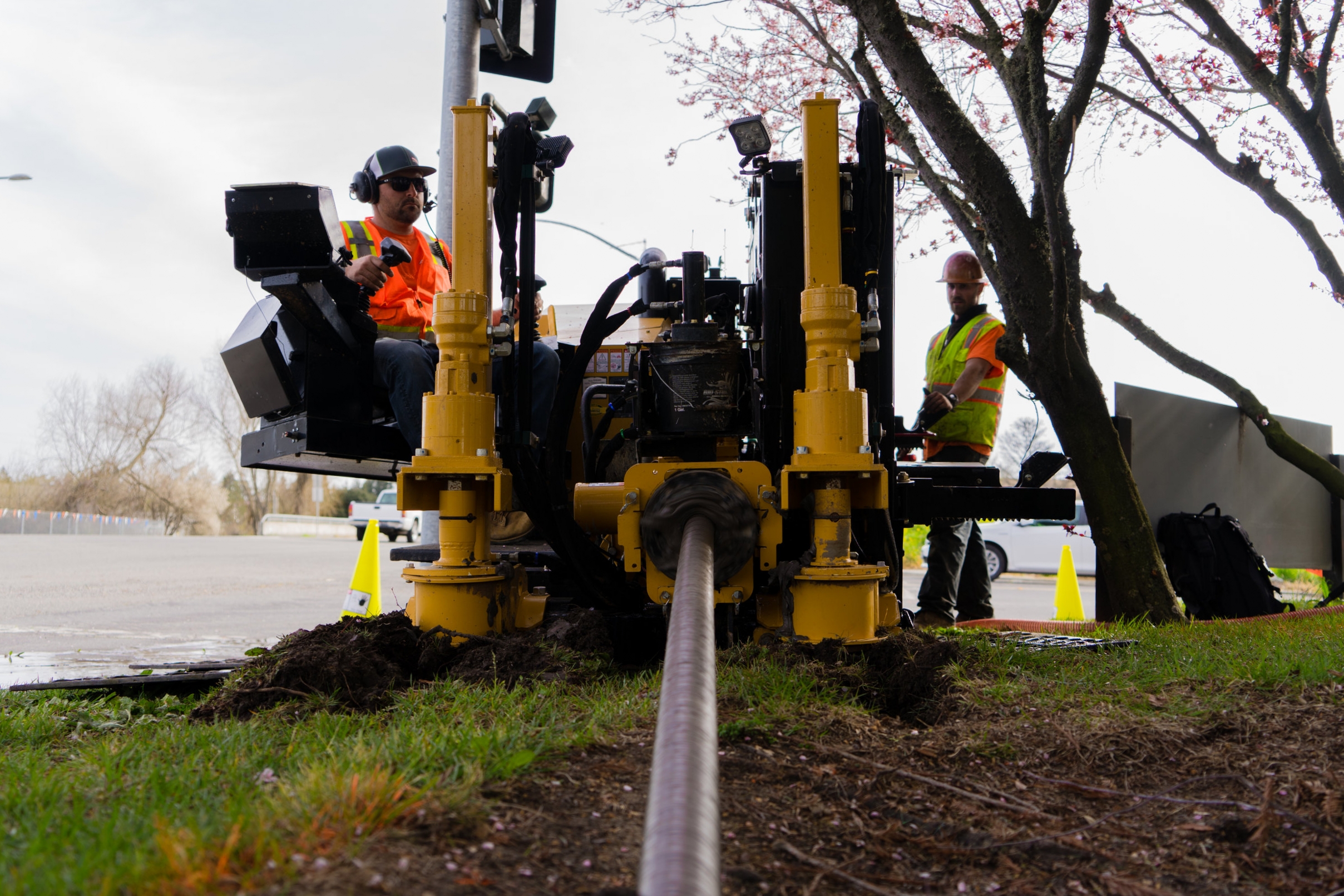
Instead of excavating an open trench for the entire length of the installation, directional drilling generally requires limited access points. Specialized drilling equipment creates a pilot bore underground along a predetermined route. The bore can then be enlarged as necessary before the new pipe or conduit is pulled through the completed path.
The process can significantly reduce disruption to the surface compared with conventional trenching.
Horizontal directional drilling can be particularly useful when utilities must pass beneath existing features such as roads, driveways, parking areas, landscaping, sidewalks, or other improvements that property owners want to preserve whenever possible.
Horizontal Directional Drilling vs. Traditional Trenching
Traditional underground utility installation generally requires excavating a trench along much or all of the proposed utility route.
Open-trench excavation remains appropriate for many projects, but it can require removing or disturbing landscaping, pavement, concrete, driveways, and other surface improvements.
Horizontal directional drilling provides an alternative.
By boring beneath many surface obstacles, HDD can reduce the amount of excavation required to install a new underground utility.
Potential benefits include:
Less surface excavation
Reduced landscape disruption
Less disturbance to driveways and pavement
Smaller access areas
Ability to navigate beneath certain obstacles
Reduced restoration requirements
Efficient installation over longer distances
Greater flexibility on challenging properties
Because Tight Access Excavation provides both directional drilling and conventional excavation, we can evaluate the project and determine which approach is appropriate rather than trying to make every installation fit a single method.
Trenchless Utility Installation
Horizontal directional drilling is one of the most useful techniques available for trenchless utility installation.
Trenchless installation allows underground utilities to be placed while minimizing the amount of continuous surface excavation required.
This can be particularly valuable on developed residential and commercial properties where an open trench could disrupt landscaping, driveways, parking areas, access routes, or other improvements.
Tight Access Excavation provides trenchless installation for a variety of underground utility applications. Project requirements vary based on the utility, pipe or conduit size, distance, soil conditions, existing infrastructure, access, and other site-specific considerations.
We evaluate these factors when determining an appropriate installation approach.
Underground Utility Installation Using HDD
Directional drilling can be used for many types of underground infrastructure.
Tight Access Excavation provides HDD and underground utility installation for applications that may include:
Water lines
Sewer lines
Gas lines
Electrical conduit
Fiber optic conduit
Telecommunications
Communications conduit
Utility sleeves
Irrigation lines
Other underground piping and conduit
The ability to install different types of utilities makes horizontal directional drilling useful for homeowners, businesses, contractors, developers, utility projects, and other property improvements.
Water Line Directional Drilling
Installing or replacing an underground water line can require crossing landscaped yards, driveways, walkways, and other developed areas.
Horizontal directional drilling can provide a less disruptive method of installing new water piping beneath many of these obstacles.
Instead of excavating the entire utility route, directional boring allows the new line to follow a planned underground path between access points.
HDD may be useful for residential water services, commercial water lines, irrigation infrastructure, and other underground water installations.
The appropriate installation method depends on the pipe requirements, distance, soil, existing utilities, elevation, access, and project specifications.
Sewer Line Directional Drilling
Directional drilling may also be used for certain underground sewer installations where project conditions allow.
Sewer projects require careful consideration of pipe alignment, elevation, grade, connection points, soil conditions, and existing infrastructure. These factors help determine whether directional drilling or conventional excavation is appropriate.
When HDD is suitable, trenchless installation can reduce surface disruption when routing sewer piping beneath driveways, landscaping, paved areas, and other existing improvements.
Tight Access Excavation can evaluate site conditions and project requirements to determine an appropriate approach for underground sewer installation.
Underground Electrical Conduit Installation
Electrical service upgrades, new construction, accessory structures, outdoor equipment, and other projects may require new underground electrical conduit.
Directional boring can allow conduit to be installed beneath developed areas without excavating a continuous trench across the property.
Applications may include underground conduit for:
Electrical service
Residential electrical projects
Commercial electrical projects
Accessory structures
Outdoor equipment
Lighting systems
EV infrastructure
Other underground electrical connections
We work with project requirements to create an underground path appropriate for the planned conduit installation.
Gas Line Directional Drilling
Some projects require underground piping or conduit routes for gas utility installations.
Horizontal directional drilling can help establish an underground route while reducing disturbance to surface features compared with continuous trench excavation.
Gas-related projects require careful coordination, appropriate materials, permitting, utility locating, and compliance with applicable requirements.
Tight Access Excavation can provide the drilling and excavation capabilities needed for qualifying underground gas utility projects while coordinating with the appropriate contractors and project professionals as required.
Fiber Optic & Telecommunications Installation
Modern homes, businesses, developments, and infrastructure projects increasingly depend on reliable underground communications.
Directional drilling can provide an efficient method for installing fiber optic and telecommunications conduit beneath roads, driveways, parking areas, landscaping, and other obstacles.
Applications can include:
Fiber optic conduit
Telecommunications conduit
Communications infrastructure
Data conduit
Utility sleeves
Commercial communications projects
Installing conduit underground can protect communications infrastructure while preserving the appearance and usability of the surface above.
Directional Drilling Under Driveways
A driveway can create a significant obstacle when installing a new underground utility.
Traditional trenching may require cutting through the driveway and repairing the affected surface afterward.
Horizontal directional drilling can often provide another option.
Depending on site conditions, we may be able to bore beneath the driveway and install the required pipe or conduit without excavating across the entire paved surface.
This can reduce disruption and potentially minimize the amount of driveway restoration required after utility installation.
Directional Drilling Under Roads
Road crossings are another common application for horizontal directional drilling.
Rather than opening a trench across the roadway, HDD can allow qualifying underground utilities to pass beneath the road.
Directional drilling may be used for water lines, utility conduit, communications, and other infrastructure depending on project requirements.
Road crossings can involve additional planning, permitting, utility locating, traffic considerations, and coordination. Every project should therefore be evaluated individually before determining the appropriate drilling method.
Directional Drilling Under Landscaping
Established landscaping can represent a significant investment.
Installing an underground utility with conventional trenching may require disturbing lawns, gardens, irrigation systems, trees, pathways, and other landscape features.
Directional drilling can help minimize this disruption by routing utilities beneath many surface improvements.
While access points and some excavation are still typically necessary, the overall disturbed area may be considerably smaller than a continuous trench.
This makes HDD particularly attractive for developed residential and commercial properties.
Residential Directional Drilling
Tight Access Excavation provides directional drilling for residential projects throughout Sonoma, Marin, and Napa Counties.
Residential properties can present unique challenges, including narrow access, mature landscaping, existing driveways, retaining walls, slopes, neighboring structures, and limited areas for equipment.
Our experience with excavation and specialized access conditions helps us evaluate these challenges and develop practical installation strategies.
Residential HDD projects may involve water services, electrical conduit, sewer lines, communications, irrigation, utility upgrades, accessory structures, and other underground installations.
Commercial Directional Drilling
Commercial properties often require underground utility installation while maintaining access for employees, tenants, customers, vehicles, and normal business operations.
Directional drilling can help reduce surface disturbance when installing underground utilities through developed commercial properties.
Applications may include:
Water infrastructure
Electrical conduit
Communications
Fiber optic conduit
Utility upgrades
New building services
Parking area crossings
Underground piping
Other commercial utility installations
Project planning can account for existing infrastructure, property access, operating requirements, and the location of proposed utilities.
Directional Drilling for Limited-Access Properties
Limited access is one of the areas where Tight Access Excavation's experience can be particularly valuable.
North Bay properties can include narrow side yards, slopes, mature landscaping, retaining walls, existing structures, difficult terrain, and other conditions that complicate conventional excavation.
Our company has decades of experience working on projects where access and site conditions require careful equipment selection and planning.
Depending on the property and project requirements, directional drilling can provide another tool for completing underground installations while limiting unnecessary disturbance.
How the Horizontal Directional Drilling Process Works
Every directional drilling project is different, but the general HDD process typically involves several stages.
1. Project Evaluation
We begin by reviewing the proposed utility route, installation requirements, access, soil conditions, existing improvements, and other known site considerations.
2. Utility Location and Planning
Existing underground utilities must be identified before drilling begins. The planned bore path is evaluated in relation to known infrastructure and project requirements.
3. Pilot Bore
Specialized drilling equipment creates an initial underground bore along the planned route.
4. Bore Enlargement
Depending on the size of the pipe or conduit being installed, the pilot bore may be enlarged to create sufficient space for the new utility.
5. Pipe or Conduit Installation
The new pipe or conduit is pulled through the prepared underground path.
6. Completion and Restoration
After installation is complete, access areas are addressed and disturbed portions of the site can be restored as required by the project.
The exact process varies based on the utility type, bore length, diameter, ground conditions, access, and other project requirements.
How Far Can Horizontal Directional Drilling Go?
The achievable distance of a directional bore depends on several factors, including pipe diameter, soil conditions, equipment, access, elevation, bore path, and project requirements.
Tight Access Excavation can perform substantial directional bores, with some projects potentially reaching approximately 500 to 800 feet depending on pipe size and site conditions.
Longer or technically demanding bores require careful planning and evaluation.
Rather than assuming a particular distance is feasible, we review the specific conditions of each project before recommending an approach.
Benefits of Horizontal Directional Drilling
HDD can offer significant advantages when compared with conventional open-trench installation.
Depending on the project, benefits may include:
Reduced excavation
Less disruption to landscaping
Ability to pass beneath driveways
Ability to cross beneath certain roads
Reduced pavement disturbance
Smaller surface work areas
Less restoration
Efficient underground utility installation
Flexibility around existing improvements
Solutions for challenging properties
The most important benefit is flexibility. Directional drilling provides another installation option when surface conditions make conventional excavation undesirable or difficult.
Is Directional Drilling Right for My Project?
Horizontal directional drilling is an excellent technology, but it isn't automatically the best solution for every underground project.
Factors that should be evaluated include:
Utility type
Pipe or conduit diameter
Required distance
Soil and geological conditions
Existing underground utilities
Available equipment access
Elevation changes
Required grade
Surface obstacles
Connection points
Permitting requirements
Project specifications
Because Tight Access Excavation provides both HDD and traditional excavation, we can evaluate the overall project and recommend an appropriate construction method based on actual site conditions.
Horizontal Directional Drilling in Sonoma County
Tight Access Excavation provides horizontal directional drilling throughout Sonoma County for residential, commercial, and underground utility projects.
From developed urban properties to rural sites, Sonoma County presents a wide range of terrain, access, and infrastructure conditions.
We provide directional boring and excavation services for projects in Santa Rosa, Sebastopol, Petaluma, Rohnert Park, Windsor, Healdsburg, Sonoma, and other Sonoma County communities.
Horizontal Directional Drilling in Marin County
We provide HDD and underground utility installation throughout Marin County.
Marin properties can present challenging conditions involving hillsides, narrow access, established landscaping, driveways, dense development, and existing improvements.
Directional drilling can be particularly valuable where reducing surface disturbance is a project priority.
Our Marin County service area includes San Rafael, Novato, Mill Valley, San Anselmo, Fairfax, Larkspur, Corte Madera, and surrounding communities.
Horizontal Directional Drilling in Napa County
Tight Access Excavation also provides horizontal directional drilling and excavation services throughout Napa County.
We work on residential, commercial, and underground utility projects requiring professional directional boring and excavation capabilities.
HDD may be used to install utilities while minimizing disturbance to existing landscaping, pavement, driveways, roads, and other developed areas.
Why Choose Tight Access Excavation?
Horizontal directional drilling requires specialized equipment, experience, careful planning, and an understanding of underground construction.
Tight Access Excavation has provided drilling and excavation services in the North Bay since 1990.
Customers and contractors choose us for:
More than 35 years of experience
Horizontal directional drilling expertise
Directional boring capabilities
Trenchless utility installation
Conventional excavation capabilities
Limited-access excavation experience
Residential and commercial projects
Underground utility installation
Specialized equipment
North Bay experience
Licensed General Engineering Contractor
Sonoma, Marin, and Napa County service
Our ability to provide both directional drilling and excavation gives us greater flexibility when developing solutions for challenging underground projects.
Horizontal Directional Drilling FAQs
Is horizontal directional drilling the same as directional boring?
The terms horizontal directional drilling and directional boring are often used to describe similar trenchless methods for installing underground pipe and conduit. Terminology can vary based on the project, equipment, bore size, and industry.
Does directional drilling require any digging?
Yes. HDD significantly reduces continuous trenching, but excavation is generally still required for equipment access, entry and exit areas, connections, or other project needs.
What utilities can be installed using directional drilling?
Depending on project conditions, HDD can be used for water lines, sewer lines, electrical conduit, gas-related infrastructure, fiber optic conduit, telecommunications, communications, utility sleeves, and other underground installations.
Can directional drilling go underneath a driveway?
In many situations, yes. Directional drilling can allow underground pipe or conduit to pass beneath an existing driveway without excavating a continuous trench through the paved surface.
Can you directional bore underneath a road?
Directional drilling is commonly used for qualifying road-crossing projects. Feasibility depends on factors including distance, depth, soil conditions, existing utilities, permits, access, and the infrastructure being installed.
Is HDD less disruptive than trenching?
HDD can significantly reduce surface disturbance because it doesn't normally require a continuous open trench along the entire utility route. Access and connection excavation may still be necessary.
How far can Tight Access Excavation drill?
Some directional drilling projects can potentially reach approximately 500 to 800 feet depending on pipe diameter, soil conditions, equipment access, bore path, and other project-specific factors. Each project needs to be evaluated individually.
Can HDD be used on residential properties?
Yes. Directional drilling can be particularly useful on developed residential properties where driveways, landscaping, walkways, structures, or limited access make continuous trenching undesirable.
Do you provide commercial directional drilling?
Yes. Tight Access Excavation provides directional drilling and underground utility installation for both residential and commercial projects throughout the North Bay.
What areas does Tight Access Excavation serve?
Tight Access Excavation provides horizontal directional drilling, directional boring, excavation, and underground utility services throughout Sonoma County, Marin County, Napa County, and surrounding North Bay areas.
Request a Horizontal Directional Drilling Quote
If your project requires underground utility installation, Tight Access Excavation can help determine whether horizontal directional drilling, conventional excavation, or a combination of methods is appropriate.
From water lines and sewer piping to electrical conduit, communications, and other underground utilities, we have the equipment and experience to handle challenging residential and commercial installations.
Contact Tight Access Excavation today to discuss your project and request a quote for horizontal directional drilling, directional boring, or trenchless utility installation in Sonoma, Marin, or Napa County.Whenever you need any type of pipe, conduit or cable installed on your property, horizontal directional drilling (HDD) can be a minimal-impact, cost effective solution. Directional drilling, sometimes called directional boring, can be used for a multitude of projects from installing home irrigation, pool and sewer lines, to commercial and industrial telecommunications and gas lines.
For more information about our horizontal drilling capabilities, please call us at: 707-795-0369.
“Tight Access has done two jobs for me recently, one a very large multi-faceted custom home excavation, including driveway construction, 65 foundation piers drilled and building pad leveling, and the other a water service job crossing a California rural highway, requiring careful management of the public highway access during construction. In both cases, Tight Access was highly skilled, and thoroughly professional. I have no hesitation recommending them.”